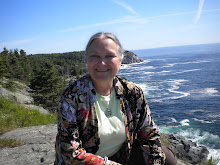
I haven't been paying much attention to this blog lately, but maybe Easter is a good time to begin again. My life is moving in a different direction, and at this season, the pace is accelerating -- there are things to do and deadlines to meet to make myself ready to leave Manchester and become an intentional interim minister. I'm excited and energized by the prospect!
The blog started as a way to keep in touch when I was on sabbatical in spring of 2007, and has shifted emphasis along the way, but now I'm back in pilgrimage mode, this time entering on a project to be a kind of 21st century circuit rider. I see this as a return to my original intention, to keep in touch as I travel and to record what I learn. Two years ago at Easter I was in San Cristobal de las Casas, in Chiapas, Mexico, experiencing the traditional ceremonies that mark this Christian high holy day in a rather traditional place. There were a crowd of people who followed the procession of Christ carrying the cross, many dressed in black, on Good Friday. Then all was festivity on Easter Sunday. This year I am again celebrating with my ambivalent congregation, lifting Christianity out of "Lo the Earth Awakes Again" with the help of Rebecca Parker and Rita Nakashima Brock, wondering why it's so hard to include Christian holidays as among the many traditions we honor. Where will I be next Easter? In the land of Unitarian Universalist ambivalence, I'm sure, but someplace different, with its own traditions and its own Easter hangups.
I'm hoping to learn much about congregations in transition, and in the process to learn about who they are and how they do church. I have ambitions to help them be their best selves in the world, overcoming old habits that keep them stuck in the past. Can that happen? Maybe sometimes. And maybe sometimes it is sufficient to be with them, love them, and do church with them more or less the way they are used to having it. I feel the season's joyance, as the hymnodist suggests, partly from the spring and partly from the liturgical calendar. New possibilites waft through my life on the fresh breeze. It is good to be alive and good to be part of this faith tradition.
Thursday, April 9, 2009


Thursday, December 4, 2008
Death for Michael Addison?
It was a dreadful deed done by a young man with a violent past. He shot the police officer, and he had been thinking of shooting cops for days, if not longer. Is death the answer for this crime?
I think of lynchings, of course, when I think of the death penalty. And I think of the many mistakes made in the many courts where death was meted out only to be overturned when more evidence was gained. This one is not one of those. But lynching is still on my mind, since this criminal is black, being tried in the white state of New Hampshire.
There is no clear answer in the Bible, though for Christians, the example of the life of Jesus certainly points toward punishments that do not result in death. His way was one of nonviolence.
In John 8:3-11, Jesus intervenes in the case of a woman about to be stoned to death for adultery, saying "Let anyone among you who is without sin be the first to throw a stone at her." Depending on what you believe about apostolic witness, this is pretty straightforward. But this story is not attested by any other gospel, nor does it appear in the earliest manuscripts of the Book of John. Is it truly the teaching of God? No matter how much I like it, I find it a slim support for not casting stones.
In Romans 13: 1-5, the Apostle Paul writes of the importance of submitting to the authority of government. But this is the teaching of someone who leads a community that does not govern. Paul's people are not able to choose whether government will impose death on some criminals or not. So his advice is to accept what cannot be changed. We, however, live in a world where there is some choice about what government requires, and in this case, the jury has a choice about what sentence to impose.
In Matthew 5:21-22, Jesus clearly teaches that Christians should not kill, or even be angry with others. But at the same time, in the very same chapter of Matthew, Jesus affirms the rightness of the Law of Moses, saying "Do not think that I have come to abolish the law or the prophets...Not one letter, not one stroke of a letter, will pass from the law until all is accomplished." And the Law of Moses affirms the death penalty.
Then there's the much quoted "all who take the sword will perish by the sword" in Matthew 26: 51-52. Michael Addison is one who has taken the sword, so to speak, and some would argue that Jesus calls for such a one to perish by the sword. But this is circular unless the sword is in the hand of God, for someone else must "take the sword" to kill him -- and presumably also suffer the same condemnation. I'm inclined to see this teaching as offering the lesson that violence only leads to more violence.
So that's where I end in a reflection on Christian scriptures and the death penalty. Violence only leads to more violence. If we deplore the violence that cost Officer Briggs his life, then it is only appropriate to find a way to punish without violence. We must be the change we wish to see in the world.
The jury will decide, regardless of what Scripture or other authority may say. I think it's time we gave some thought to adjusting the laws of our state to take this decision out of the hands of future juries. Let us punish without violence, I say, for those who take the sword will perish by the sword.
I think of lynchings, of course, when I think of the death penalty. And I think of the many mistakes made in the many courts where death was meted out only to be overturned when more evidence was gained. This one is not one of those. But lynching is still on my mind, since this criminal is black, being tried in the white state of New Hampshire.
There is no clear answer in the Bible, though for Christians, the example of the life of Jesus certainly points toward punishments that do not result in death. His way was one of nonviolence.
In John 8:3-11, Jesus intervenes in the case of a woman about to be stoned to death for adultery, saying "Let anyone among you who is without sin be the first to throw a stone at her." Depending on what you believe about apostolic witness, this is pretty straightforward. But this story is not attested by any other gospel, nor does it appear in the earliest manuscripts of the Book of John. Is it truly the teaching of God? No matter how much I like it, I find it a slim support for not casting stones.
In Romans 13: 1-5, the Apostle Paul writes of the importance of submitting to the authority of government. But this is the teaching of someone who leads a community that does not govern. Paul's people are not able to choose whether government will impose death on some criminals or not. So his advice is to accept what cannot be changed. We, however, live in a world where there is some choice about what government requires, and in this case, the jury has a choice about what sentence to impose.
In Matthew 5:21-22, Jesus clearly teaches that Christians should not kill, or even be angry with others. But at the same time, in the very same chapter of Matthew, Jesus affirms the rightness of the Law of Moses, saying "Do not think that I have come to abolish the law or the prophets...Not one letter, not one stroke of a letter, will pass from the law until all is accomplished." And the Law of Moses affirms the death penalty.
Then there's the much quoted "all who take the sword will perish by the sword" in Matthew 26: 51-52. Michael Addison is one who has taken the sword, so to speak, and some would argue that Jesus calls for such a one to perish by the sword. But this is circular unless the sword is in the hand of God, for someone else must "take the sword" to kill him -- and presumably also suffer the same condemnation. I'm inclined to see this teaching as offering the lesson that violence only leads to more violence.
So that's where I end in a reflection on Christian scriptures and the death penalty. Violence only leads to more violence. If we deplore the violence that cost Officer Briggs his life, then it is only appropriate to find a way to punish without violence. We must be the change we wish to see in the world.
The jury will decide, regardless of what Scripture or other authority may say. I think it's time we gave some thought to adjusting the laws of our state to take this decision out of the hands of future juries. Let us punish without violence, I say, for those who take the sword will perish by the sword.
Sunday, November 23, 2008
Thanks
The news is that there is a radio station that is already into Christmas music, the idea being that people need a lift from all the woeful tidings of the season. Excuse me, but what happened to Thanksgiving?
I get a lift from giving thanks, especially when times are hard. Gratitude is, in fact, one of the big spiritual practices of the world's religions. Give thanks, they say. Giving thanks is important, they say. It's important because it is uplifting. People need a lift from all the woeful tidings of the season, so let us undertake the spiritual practice of giving thanks.
Imagine all the years when harvests were thin, and survival through the winter was a dicey prospect. What did our foreparents do? They worried, of course, but also they gave thanks. And why not? The world is full of many wonders. Life is amazing. Every day I wake up, it's time to give thanks. And throughout the day there are many moments to be grateful. Grateful for the smile of the waitress at the coffee shop. Grateful for the greeting of my co-worker. Grateful for the opportunity to make what I can of another day. Letting gratitude run through my day, pretty soon I realize I am in love with life, indeed, that I am happy, that I am in awe of nature and human invention, and so much more. And yes, my 401(k) is toast.
There are so many bad things that happen, things for which gratitude is really not the appropriate response. But then, through the rage and disappointment, beyond the tears, it turns out there is something, not the central event, but something around the edges, there is something for which to be thankful. Those little crumbs of gratitude from around big awful events are important. They make a trail that can lead us from bitterness to forgiveness, from despair to renewed hope, a trail of crumbs through the dark places that can take us back out again.
So let us not go quite yet to the forgettable and commercial uplift of Christmas songs on the radio. Let's take time for Thanksgiving first, and tune up our spiritual practice of gratitude. It's something within ourselves that will deliver the goods as we face these hard times. And it's good to start with giving thanks.
I get a lift from giving thanks, especially when times are hard. Gratitude is, in fact, one of the big spiritual practices of the world's religions. Give thanks, they say. Giving thanks is important, they say. It's important because it is uplifting. People need a lift from all the woeful tidings of the season, so let us undertake the spiritual practice of giving thanks.
Imagine all the years when harvests were thin, and survival through the winter was a dicey prospect. What did our foreparents do? They worried, of course, but also they gave thanks. And why not? The world is full of many wonders. Life is amazing. Every day I wake up, it's time to give thanks. And throughout the day there are many moments to be grateful. Grateful for the smile of the waitress at the coffee shop. Grateful for the greeting of my co-worker. Grateful for the opportunity to make what I can of another day. Letting gratitude run through my day, pretty soon I realize I am in love with life, indeed, that I am happy, that I am in awe of nature and human invention, and so much more. And yes, my 401(k) is toast.
There are so many bad things that happen, things for which gratitude is really not the appropriate response. But then, through the rage and disappointment, beyond the tears, it turns out there is something, not the central event, but something around the edges, there is something for which to be thankful. Those little crumbs of gratitude from around big awful events are important. They make a trail that can lead us from bitterness to forgiveness, from despair to renewed hope, a trail of crumbs through the dark places that can take us back out again.
So let us not go quite yet to the forgettable and commercial uplift of Christmas songs on the radio. Let's take time for Thanksgiving first, and tune up our spiritual practice of gratitude. It's something within ourselves that will deliver the goods as we face these hard times. And it's good to start with giving thanks.
Sunday, November 9, 2008
Turning?
Turning is what people say we need to do as a nation. We have somehow gotten onto the wrong path, and we must turn now to a better way. We have chosen a President who promises change, and surely turning to a better way would be another way of putting that. But what is our relationship now to that choice? Have we done our part of the work by making up or minds and voting? I hope that is not all we little people plan to do.
I'm thinking of our country as a large piece of equipment, a big truck, or a ship, something that takes a lot of energy to turn. And this turning is not even so simple as a change of direction for an earth mover, a truck, or a ship. Besides, the pieces of the turning all seem to be interrelated, and not all the levers that control the parts are in the hands of our new president. He controls some of them, and influences some of them, but not all of them, and as he has carefully reminded us, not yet. We chose, and fell back in amazement at our work, which truly is amazing, but it is not done yet -- he starts work on January 20. The other elected officials we chose at the same time will be working with him, whether as partners in his vision or as loyal opposition. That will certainly help us get pointed toward a different direction, but the change of direction involves other institutions than government.
There is still work for us to do. We need to hold to the vision with its interconnected parts, a vision partly in the hands of government, partly influenced by government, and to some degree outside government control. A new way of doing international relations, lowered reliance on fossil fuels, a better system for access to health care, better public education, and a renewed commitment to protecting the habitability of the planet, these are the major headings of what's involved. First, government will have to deal with the immediate crises in the financial markets and the "real" economy. It's important for us to hold the vision of the changes we need, and to start working on them directly as opportunity presents itself.
Maybe there are new "green" enterprises to be started. Maybe the are ways to promote good health practices, from healthy eating to exercise without getting involved with government programs. Maybe there are ways to lead change with local initiative before they make up their minds at the national level. Maybe there are tiny international efforts at outreach that we can make our own.
People are going to be doing things on a small scale that help direct the change that is starting to happen. Some people will be doing things on a larger scale outside the realm of government. Will they be people who value human dignity and diversity? will they be people who value the use of democratic processes everywhere in society? One way to make sure they will be people who have the values we teach in Unitarian Universalism is for them be members of our faith community -- perhaps you? or someone you know? or someone who hasn't yet found us? We are a larger faith in the sense that we direct our attention to the deep needs of our world here and now, rather than to some imagined other world. And I say we need to be a larger faith in numbers, too, in order to help make this turning happen in the right way, in a way that is good for people in all walks of life and good for all living things, in a way that is good for the Earth.
Show all
I'm thinking of our country as a large piece of equipment, a big truck, or a ship, something that takes a lot of energy to turn. And this turning is not even so simple as a change of direction for an earth mover, a truck, or a ship. Besides, the pieces of the turning all seem to be interrelated, and not all the levers that control the parts are in the hands of our new president. He controls some of them, and influences some of them, but not all of them, and as he has carefully reminded us, not yet. We chose, and fell back in amazement at our work, which truly is amazing, but it is not done yet -- he starts work on January 20. The other elected officials we chose at the same time will be working with him, whether as partners in his vision or as loyal opposition. That will certainly help us get pointed toward a different direction, but the change of direction involves other institutions than government.
There is still work for us to do. We need to hold to the vision with its interconnected parts, a vision partly in the hands of government, partly influenced by government, and to some degree outside government control. A new way of doing international relations, lowered reliance on fossil fuels, a better system for access to health care, better public education, and a renewed commitment to protecting the habitability of the planet, these are the major headings of what's involved. First, government will have to deal with the immediate crises in the financial markets and the "real" economy. It's important for us to hold the vision of the changes we need, and to start working on them directly as opportunity presents itself.
Maybe there are new "green" enterprises to be started. Maybe the are ways to promote good health practices, from healthy eating to exercise without getting involved with government programs. Maybe there are ways to lead change with local initiative before they make up their minds at the national level. Maybe there are tiny international efforts at outreach that we can make our own.
People are going to be doing things on a small scale that help direct the change that is starting to happen. Some people will be doing things on a larger scale outside the realm of government. Will they be people who value human dignity and diversity? will they be people who value the use of democratic processes everywhere in society? One way to make sure they will be people who have the values we teach in Unitarian Universalism is for them be members of our faith community -- perhaps you? or someone you know? or someone who hasn't yet found us? We are a larger faith in the sense that we direct our attention to the deep needs of our world here and now, rather than to some imagined other world. And I say we need to be a larger faith in numbers, too, in order to help make this turning happen in the right way, in a way that is good for people in all walks of life and good for all living things, in a way that is good for the Earth.
Show all
Tuesday, October 28, 2008
Decisions
So here we are at the end of October, making decisions about how to cast our ballots for president on November 4th. We hope these decisions have everything to do with considering what we value, comparing it to what we think might be delivered, using good judgment about aligning our interests with our candidates.
In some ways, it's an exercise in faith. We have no idea what the candidates will really do when they get elected. Sometimes we hope they will do something a little different than what they have promised. For me, I'm hoping that "clean coal" turns out to be something we can live without, and that promises in that department need not be kept. Sometimes, once they are elected, they just change their minds about what they can or want to do, and there we all are.
So we look deeper. There's that surface level where we can calculate whose health care plan or tax plan looks like a better deal for us, and even which one looks like a better deal in terms of the kind of country we'd like to live in. Who is this person? And who are the people around him? What are the indicators of the qualities of character we look for? Yes, it's about character, but not in the sloganeered way we have known in past campaigns.
Unitarians used to believe that good character itself brought a kind of salvation, and indeed, we spend a lot of energy in our congregations considering how to be good people, people of good character. Our seven principles are guides to character as well as being guides to action in the world. So I suggest as a handy guide to the character of our next president a quick check of our own seven principles:
Does he respect the worth and dignity of every person?
Does he model justice, equity, and compassion in human relations?
Does he accept others and encourage them -- if not to spiritual growth, then to finding their own way to a good life?
Does he pursue a free and responsible search for truth and meaning?
Is his way of working with others a model of democratic process?
Does he reach out in meaningful ways toward a world of peace, liberty, and justice for all?
And by his actions does he show respect for the interdependence of all life on our Planet?
If he passes the UU Principles Character Test in addition to promising policies and actions you approve, I say, the choice will be clear. If your deep intuition still tells you something else, I say, examine the sources of your deep intuition. This year's election is not just about getting on with our same way of being a country. It's about finding another way. Character can help us find the leader for that vitally important task.
In some ways, it's an exercise in faith. We have no idea what the candidates will really do when they get elected. Sometimes we hope they will do something a little different than what they have promised. For me, I'm hoping that "clean coal" turns out to be something we can live without, and that promises in that department need not be kept. Sometimes, once they are elected, they just change their minds about what they can or want to do, and there we all are.
So we look deeper. There's that surface level where we can calculate whose health care plan or tax plan looks like a better deal for us, and even which one looks like a better deal in terms of the kind of country we'd like to live in. Who is this person? And who are the people around him? What are the indicators of the qualities of character we look for? Yes, it's about character, but not in the sloganeered way we have known in past campaigns.
Unitarians used to believe that good character itself brought a kind of salvation, and indeed, we spend a lot of energy in our congregations considering how to be good people, people of good character. Our seven principles are guides to character as well as being guides to action in the world. So I suggest as a handy guide to the character of our next president a quick check of our own seven principles:
Does he respect the worth and dignity of every person?
Does he model justice, equity, and compassion in human relations?
Does he accept others and encourage them -- if not to spiritual growth, then to finding their own way to a good life?
Does he pursue a free and responsible search for truth and meaning?
Is his way of working with others a model of democratic process?
Does he reach out in meaningful ways toward a world of peace, liberty, and justice for all?
And by his actions does he show respect for the interdependence of all life on our Planet?
If he passes the UU Principles Character Test in addition to promising policies and actions you approve, I say, the choice will be clear. If your deep intuition still tells you something else, I say, examine the sources of your deep intuition. This year's election is not just about getting on with our same way of being a country. It's about finding another way. Character can help us find the leader for that vitally important task.
Friday, August 29, 2008
Intensive Beach
I had signed up to take an intensive class in Unitarian Spiritual Practice as a student at large at Meadville Lombard Theological School, a week of intensive immersion in learning the spiritual practices of our Unitarian ancestors, mainly the Transcendentalists. Rev. Rob Hardies was going to be teaching it, And it was going to be at Ferry Beach, on the coast of Maine. This was a double attraction, important learning and agreeable location, so I was sure it would be worth the rather astonishing cost.
Now I can report that it was a good choice. Seventeen of us gathered six hours a day for five days in a large room normally used for things involving yoga mats and exercise balls. We had read a large number of books and articles and signed up to do presentations on others that not all of us were reading. (I was part of the Theodore Parker team). I confess, I had not been as well prepared as I intended to be, but I was able to hang onto the thread of the conversation throughout.
The practice of self-culture was at the center of Transcendentalist spirituality, a practice that owed a lot to the way the Puritans had done things before, but also reached across the Atlantic to the German and English Romantics. It had everything to do with starting your day intending to become a better person, examining yourself on a daily basis through keeping a journal and reflecting prayerfully, and consecrating your life to the good of all. In their hands, at that time in the development of American culture, it became a powerful tool for social change. It can be argued that echoes of self-culture still echo down the years in our culture today. As a particularly poignant example, we listened together to Barak Obama's acceptance speech and heard them.
And all week we had a succession of the kind of sweet summer days that make people come back to the Maine coast year after year. Sunshine, a little breeze, cool at night and warm in the day. Not too hot. The water, of course, was too cold for real swimming, which was just as well, since we were not really free during the prime beach hours. There was plenty of walking on the beach, enjoying the porch facing the sea, listening to the waves, smelling the air, and imbibing the sense of peace that comes with all this beachiness. How could we keep on being up tight in a place designed to let go, surrounded by others doing much less stressful things than taking a graduate level Seminary class.
I am heading home refreshed and inspired, ready to start the church year with the spirit of those New England ancestors who loved Nature, loved one another, and loved the Spirit.
Now I can report that it was a good choice. Seventeen of us gathered six hours a day for five days in a large room normally used for things involving yoga mats and exercise balls. We had read a large number of books and articles and signed up to do presentations on others that not all of us were reading. (I was part of the Theodore Parker team). I confess, I had not been as well prepared as I intended to be, but I was able to hang onto the thread of the conversation throughout.
The practice of self-culture was at the center of Transcendentalist spirituality, a practice that owed a lot to the way the Puritans had done things before, but also reached across the Atlantic to the German and English Romantics. It had everything to do with starting your day intending to become a better person, examining yourself on a daily basis through keeping a journal and reflecting prayerfully, and consecrating your life to the good of all. In their hands, at that time in the development of American culture, it became a powerful tool for social change. It can be argued that echoes of self-culture still echo down the years in our culture today. As a particularly poignant example, we listened together to Barak Obama's acceptance speech and heard them.
And all week we had a succession of the kind of sweet summer days that make people come back to the Maine coast year after year. Sunshine, a little breeze, cool at night and warm in the day. Not too hot. The water, of course, was too cold for real swimming, which was just as well, since we were not really free during the prime beach hours. There was plenty of walking on the beach, enjoying the porch facing the sea, listening to the waves, smelling the air, and imbibing the sense of peace that comes with all this beachiness. How could we keep on being up tight in a place designed to let go, surrounded by others doing much less stressful things than taking a graduate level Seminary class.
I am heading home refreshed and inspired, ready to start the church year with the spirit of those New England ancestors who loved Nature, loved one another, and loved the Spirit.
Tuesday, August 12, 2008
Spiritual but not religious
When I read that there are more people out there in the world who claim to be Unitarian or Unitarian Universalist than there are members of our congregations, I am really confident that we have quite a congregation out there of folks who say they are "spiritual but not religious". True, some of those self-described Unitarian Universalists who don't attend our congregations are more skeptical than spiritual, but there are those who really do think they can be spiritual on their own.
To some extent, it's possible. Many of us prefer the church of nature, taking time out on weekends to go hiking or cross-country skiing or birding or whatever. This is good. Nature can be spiritually nourishing. Our spiritual ancestor, Henry David Thoreau, turned to nature for spirituality more than to other humans. But his friend, Ralph Waldo Emerson, chided him for being too often alone, and urged him to take someone else along on his rambles. Emerson thought there could be no spirituality without human companionship, it seems. Others of us just live our lives, reading books that remind us of the spirit, Conversations With God, Tuesdays with Morrie, books by Thich Nhat Hanh or the Dalai Lama, and contemplating life in what we hope is a spiritual way. But what is spirituality if it does not require anything of you beyond reading books? The spirituality based on books --even the spirituality based on attending occasional weekend workshops -- this is also incomplete without people with whom to talk it over, without the challenge to actually put the spirituality into practice.
Being "religious" can get to be a problem, though. You go someplace where people all believe some things in common, and what if you don't agree? I'm thinking there really are only a couple of things we believe in Unitarian Universalism, when it comes right down to it:
We believe in welcoming. We believe in trying to find our own spiritual paths. We believe in testing our experiences of the source of meaning and guidance through sharing with others as well as thinking it over for ourselves. And we believe in reaching out to help others, no matter where we or they are on our spiritual journeys. And that's about it.
Is it a religion? We think so. But you don't have to be "religious" to be part of it.
To some extent, it's possible. Many of us prefer the church of nature, taking time out on weekends to go hiking or cross-country skiing or birding or whatever. This is good. Nature can be spiritually nourishing. Our spiritual ancestor, Henry David Thoreau, turned to nature for spirituality more than to other humans. But his friend, Ralph Waldo Emerson, chided him for being too often alone, and urged him to take someone else along on his rambles. Emerson thought there could be no spirituality without human companionship, it seems. Others of us just live our lives, reading books that remind us of the spirit, Conversations With God, Tuesdays with Morrie, books by Thich Nhat Hanh or the Dalai Lama, and contemplating life in what we hope is a spiritual way. But what is spirituality if it does not require anything of you beyond reading books? The spirituality based on books --even the spirituality based on attending occasional weekend workshops -- this is also incomplete without people with whom to talk it over, without the challenge to actually put the spirituality into practice.
Being "religious" can get to be a problem, though. You go someplace where people all believe some things in common, and what if you don't agree? I'm thinking there really are only a couple of things we believe in Unitarian Universalism, when it comes right down to it:
We believe in welcoming. We believe in trying to find our own spiritual paths. We believe in testing our experiences of the source of meaning and guidance through sharing with others as well as thinking it over for ourselves. And we believe in reaching out to help others, no matter where we or they are on our spiritual journeys. And that's about it.
Is it a religion? We think so. But you don't have to be "religious" to be part of it.
Subscribe to:
Posts (Atom)